


Sewing thread is a small item in garment manufacturing, but its consumption can make a noticeable difference to material costing. When an order contains thousands of garments, even a small error in thread estimation can lead to excess purchasing or a shortage during production.
In garment factories, thread consumption depends on several factors: seam length, stitch type, stitches per inch (SPI), fabric thickness, machine settings and the number of sewing operations. A T-shirt, polo shirt, shirt or trousers will not use the same amount of sewing thread.
This Sewing Thread Consumption Calculator helps estimate thread requirement using total seam length, SPI, a suitable thread consumption factor and wastage allowance. You can also enter thread Tex and order quantity to estimate thread weight for bulk production.
Online Sewing Thread Consumption Calculator
Calculate Sewing Thread Requirement
What Is Sewing Thread Consumption?
Sewing thread consumption means the total length or weight of thread required to sew a garment or a specified quantity of garments.
In garment manufacturing, thread is used in different sewing operations, including shoulder joining, side seams, sleeve attachment, neck joining, hemming, waistband attachment, buttonholes and other construction details.
Each operation may use a different stitch class and thread consumption factor. For this reason, estimating thread consumption from garment seam length alone is not enough. The stitch structure and machine settings must also be considered.
Sewing Thread Consumption Formula
1. Basic Thread Consumption Formula
Here, 39.3701 converts meters into inches because SPI means stitches per inch.
2. Thread Consumption Including Wastage
3. Total Thread Requirement for an Order
4. Thread Weight Calculation Using Tex
Tex represents the mass in grams of 1,000 meters of thread. Therefore, it can be used to convert the estimated thread length into an approximate thread weight.
Practical Sewing Thread Consumption Example
Let's consider a simple garment production example.
| Particulars | Value |
|---|---|
| Total Seam Length per Garment | 4.5 meters |
| SPI | 12 |
| Thread Factor | 2.5 |
| Additional Wastage | 10% |
| Thread Tex | 40 |
| Order Quantity | 5,000 pieces |
Step 1: Convert seam length into inches
Step 2: Calculate the number of stitches
Step 3: Calculate basic thread consumption
Step 4: Add 10% wastage
This is the estimated thread requirement per garment under the example assumptions.
Step 5: Calculate total thread length for 5,000 garments
Step 6: Convert thread length into weight
= 1,169,292 grams
= 1,169.29 kg
Therefore, the estimated thread requirement is approximately 1,169.29 kg for 5,000 garments, based on the selected factor, Tex and wastage assumptions.
Factors Affecting Sewing Thread Consumption
1. Seam Length
Seam length is one of the main factors. A garment with more joining, hemming and decorative seams generally requires more sewing thread.
2. Stitch Per Inch (SPI)
SPI indicates how many stitches are made in one inch of seam. Higher SPI generally increases thread consumption when other conditions remain unchanged.
3. Stitch Type
Different stitch classes use different amounts of thread. For example, a lockstitch and a multi-thread overlock stitch have different thread paths and consumption characteristics.
4. Thread Consumption Factor
The factor accounts for the additional thread used in forming a stitch compared with the measured seam length. It varies according to stitch class, machine settings and construction.
5. Fabric Thickness
Thicker fabric and bulky seam intersections can affect thread path and consumption. Actual results should be checked on the approved fabric and garment construction.
6. Wastage and Machine Loss
Thread is also lost through machine threading, trimming, breakage, needle changes, start and end tails and other production activities. These losses should be considered separately where factory data is available.
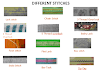
Common Stitch Types in Garment Manufacturing
| Stitch Type | Typical Application | Consumption Consideration |
|---|---|---|
| 301 Lockstitch | Shirts, trousers, woven garments | Needle and bobbin thread are both required. |
| 401 Chainstitch | Joining and certain hemming operations | Looper thread path affects consumption. |
| 504 Overedge | Knit garment edge finishing | Multiple threads form the stitch structure. |
| 516 Safety Stitch | Seam joining and edge finishing | Combines stitch structures and thread paths. |
| Coverstitch | T-shirt bottom and sleeve hemming | Needle and looper threads have different paths. |
These stitch classes are examples of commonly used constructions. Their actual thread consumption must be determined from the specific stitch formation and sewing conditions.
How to Reduce Sewing Thread Consumption
- Use the correct SPI according to buyer specifications.
- Choose suitable thread size and type for the fabric and seam.
- Optimize machine tension and stitch formation.
- Avoid unnecessary thread tails and excessive trimming.
- Maintain sewing machines to reduce thread breakage.
- Calculate consumption separately for each stitch operation.
- Compare estimated thread consumption with actual factory issue.
- Review thread wastage regularly and correct avoidable losses.
How to Calculate Thread Consumption More Accurately
For bulk production, a practical approach is to prepare an operation-wise thread consumption sheet. List each sewing operation, measure the seam length, identify the stitch class and SPI, and determine the appropriate thread factor through testing.
For a lockstitch operation, account for both needle and bobbin threads. For overlock and coverstitch operations, account for each needle and looper thread separately. Add the operation-wise results to calculate the garment's total estimated thread requirement.
After production begins, compare the estimated requirement with actual thread issued and returned. This helps identify incorrect factors, avoidable wastage and differences between planned and actual consumption.
Frequently Asked Questions About Sewing Thread Consumption
1. What is sewing thread consumption?
Sewing thread consumption is the amount of thread length or weight required to sew one garment or a specific production quantity.
2. How do I calculate thread consumption per garment?
Multiply the seam length in meters by 39.3701, SPI and the appropriate thread consumption factor. Add the applicable wastage allowance to estimate net consumption.
3. What is the sewing thread consumption formula?
Thread consumption in meters = Seam length in meters × 39.3701 × SPI × Thread factor. The factor must be appropriate for the stitch construction.
4. What does SPI mean in sewing?
SPI means Stitches Per Inch. It indicates the number of stitches formed along one inch of a seam.
5. How does SPI affect thread consumption?
When seam length and thread factor remain unchanged, increasing SPI increases the estimated number of stitches and thread consumption.
6. What is a thread consumption factor?
It is a multiplier used to estimate actual thread length relative to seam length. It varies according to stitch type, machine settings and thread path.
7. Is the thread consumption factor the same for all machines?
No. Different stitch classes and machine configurations have different thread paths. Separate factors should be established for different sewing operations.
8. How do I calculate thread consumption for a lockstitch machine?
Estimate needle and bobbin thread consumption based on the actual 301 stitch construction, seam length, SPI and tested thread factors. Both thread components must be included.
9. How do I calculate overlock thread consumption?
Calculate the thread paths for the needle and looper threads according to the overlock stitch construction. Use tested factors for the specific machine and fabric.
10. How do I calculate total thread requirement for an order?
Multiply thread consumption per garment by the order quantity. Include the applicable wastage allowance before calculating the bulk requirement.
11. How do I calculate sewing thread weight?
Multiply thread length in meters by Tex and divide by 1,000. The result is the approximate thread weight in grams.
12. What is Tex in sewing thread?
Tex is a linear density unit that represents the mass in grams of 1,000 meters of thread.
13. Does fabric thickness affect thread consumption?
Yes. Fabric thickness and seam construction can change the thread path and amount required to form a stitch.
14. Why is sewing thread wastage important?
Thread may be lost through trimming, breakage, machine setup, threading and other production activities. Including realistic wastage helps prevent material shortages.
15. How much sewing thread is required for 1,000 T-shirts?
It depends on the T-shirt design, seam lengths, SPI, stitch classes and thread factors. Calculate the consumption per garment and multiply it by 1,000.
16. Is thread consumption the same for woven and knit garments?
No. Woven and knit garments can have different seam constructions, stitch types and sewing operations, resulting in different thread requirements.
17. How can I reduce sewing thread consumption?
Use approved SPI, optimize machine settings, prevent excessive trimming, maintain machines and review operation-wise thread consumption.
18. What is the difference between thread length and thread weight?
Thread length measures how many meters of thread are used. Thread weight measures the mass of that thread, usually in grams or kilograms.
19. Can I use this calculator for bulk production planning?
Yes. Enter seam length, SPI, thread factor, wastage and order quantity. Enter thread Tex as well if you want to estimate the thread weight.
20. Is this Sewing Thread Consumption Calculator free?
Yes. Textile Mates provides this online calculator free for garment merchandisers, production planners, industrial engineers, sewing technicians and textile students.
Related Textile and Garments Calculators
- All Textile & Garments Calculators
- Fabric GSM Calculator
- Fabric Consumption Calculator
- Yarn Count Calculator
- Garment Cost Calculator
Final Thoughts
Accurate sewing thread estimation helps garment factories plan materials, control costs and avoid unnecessary thread shortages. A reliable calculation should consider every sewing operation instead of applying one general factor to the entire garment.
Use this calculator for an initial estimate, then validate the result with actual sewing trials, operation-wise consumption records and factory production data.
Textile Mates shares practical textile calculators, garment manufacturing formulas and production planning guides for textile professionals and students.



0 Comments